8
min
-
E-commerce
-
23
December
2025
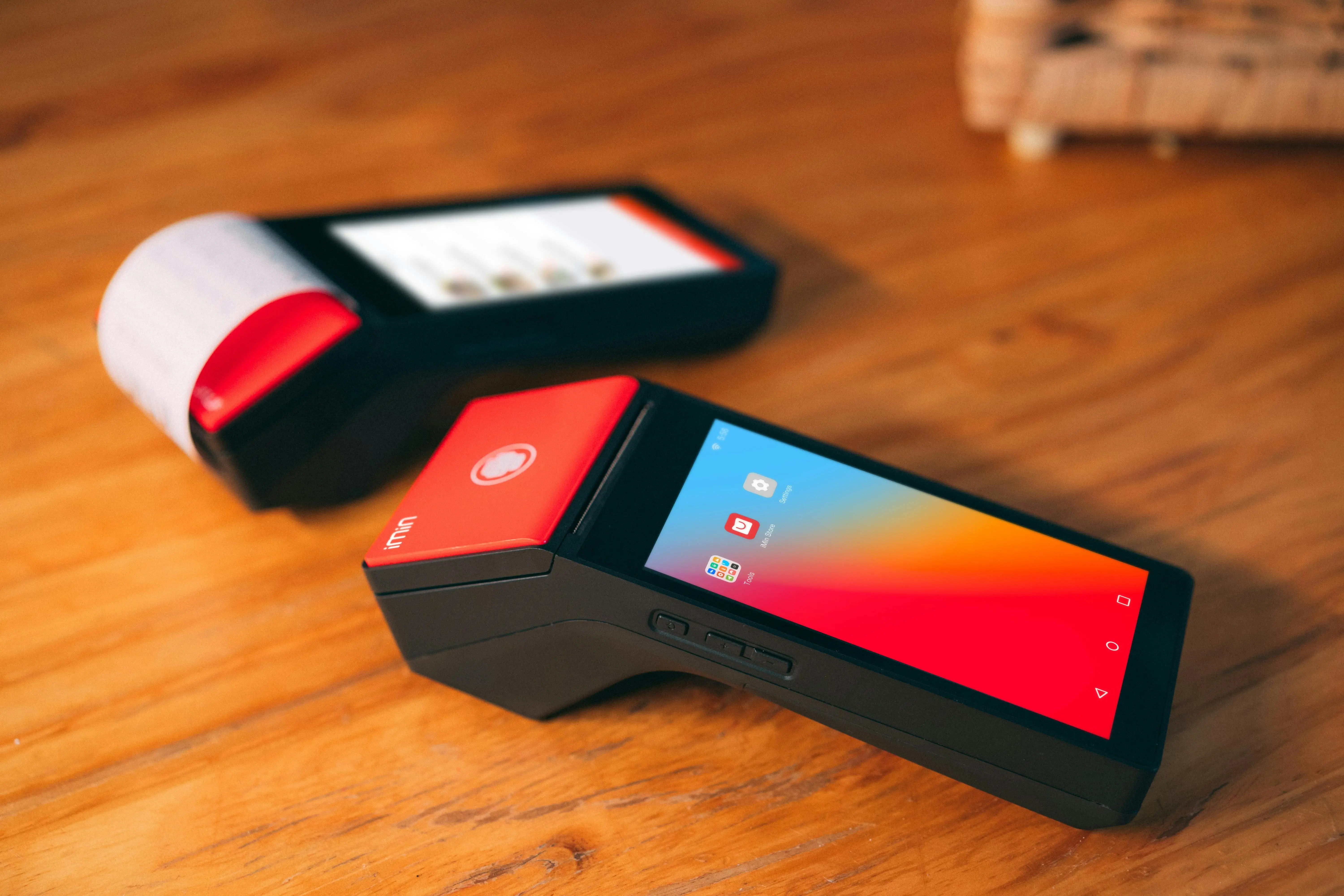
Once limited to the role of a simple cash register, point-of-sale management has evolved significantly. Today, a POS (Point of Sale) system does more than just collect payments: it synchronizes inventory, centralizes customer data, connects online and offline channels, and has become a major driver of performance.
In a context where the shopping experience must be smooth, fast, and consistent, choosing a modern POS can make the difference between a business that struggles and one that accelerates its growth.
Better still, when combined with a PIM (Product Information Management) system, it ensures that product information is reliable and consistent across all touchpoints.
A point-of-sale (POS) system is a set of hardware and software tools used to manage commercial transactions.
In concrete terms, this is the solution used when a customer pays for a product or service, but its functions go far beyond payment collection: inventory tracking, staff management, sales reports, integration with customer loyalty programs, and connection to digital channels.
In the past, a POS was simply a cash register: a mechanical or electronic device that calculated amounts and printed receipts.
Today, the POS has become a true digital platform. It can be installed on a fixed touchscreen cash register, a tablet, a smartphone, or even a self-service kiosk, and integrates with a company's entire ecosystem.
It is also important to distinguish between POS and ERP. POS acts as a front-office tool: it is closest to the customer and manages direct interactions related to sales.
ERP, on the other hand, is a back-office tool: it centralizes resource management (accounting, purchasing, logistics). The two systems are complementary: the POS collects sales data in real time, which the ERP then uses to drive strategy and operations.
A modern POS system is no longer limited to processing payments: it manages the entire purchasing journey, streamlines the customer experience, and feeds data into the company's digital ecosystem.
When a customer selects a product, it is scanned and added to a virtual shopping cart. The POS automatically calculates the total, taking into account discounts, promotions, and taxes.
The customer then chooses their payment method: cash, credit card, digital wallet, or contactless payment. Once the transaction is confirmed, the inventory is updated in real time, a receipt (paper or digital) is issued, and the information can be added to a loyalty program.
The POS is no longer limited to a traditional cash register:
A POS system is most valuable when it is interconnected. When linked to an e-commerce site, it synchronizes inventory and prices in real time to avoid inconsistencies. When connected to CRM, it feeds customer history, improves personalization, and facilitates marketing campaigns. This integration ensures omnichannel continuity: customers enjoy the same experience and information whether they are shopping online or in-store.
A POS combines hardware and software. On the hardware side, you will generally find:
On the software side, POS covers several functions: cashiering, inventory management, reporting, team monitoring, and loyalty programs. Modern solutions are open via API, facilitating their integration with ERP, PIM, CRM, and accounting systems. The POS thus becomes a true hub for connected commerce.
A POS becomes truly strategic when it is linked to a PIM Product Information Management) system. The POS manages the transaction, but it is the PIM ensures the consistency and reliability of the product data used during the sale.
In the fashion industry, PIM that the information displayed at the checkout or on a sales assistant's tablet is accurate: up-to-date prices, available sizes and colors, promotion management, etc. This prevents errors and boosts customer confidence.
In tourism, a PIM to centralize multilingual and multi-currency information. A connected POS thus benefits from content tailored to the local market, whether for booking a stay or purchasing an activity at a point of sale.
In B2B, where catalogs are often complex with prices that vary depending on the customer, PIM the distribution of clear and personalized information. The POS then relies on this reliable data to offer tailored commercial terms in real time.
In practice, PIM pricing and inventory errors, synchronizes promotions and launches more quickly, and feeds all channels (POS, e-commerce, marketplaces). Connected to the POS, it transforms sales into a consistent, omnichannel, frictionless experience.
Today, the POS is no longer just a cash register, but a true omnichannel hub capable of centralizing transactions, synchronizing inventory, and enriching customer data. When combined with a PIM, it becomes a strategic lever: all product information is reliable, consistent, and immediately available across all channels, from physical stores to e-commerce sites and marketplaces.
This combination reduces pricing and inventory errors, speeds up launches and promotions, and provides a seamless, personalized customer experience. Whether in fashion, tourism, or B2B,PIM integrationPIM product information consistency and optimizes the management of complex catalogs.
By choosing a modern POS system interconnected with a PIM, companies transform every transaction into a driver of performance and competitiveness, promoting harmonious growth and an impeccable omnichannel customer experience. The POS then becomes much more than a payment tool: it is at the heart of the commercial and digital strategy.
The POS system has undergone a profound evolution: once a simple cash register, it has become a strategic tool at the heart of modern commerce. Today's POS is no longer limited to cashiering; it centralizes transactions, synchronizes inventory in real time, connects physical and digital channels, and feeds customer data. Integrated into the company's ecosystem (ERP, CRM, e-commerce), it ensures a smooth and consistent shopping experience, regardless of the point of contact.
When coupled with a PIM Product Information Management) system, the POS takes things to the next level: product information (prices, promotions, availability, variants, multilingual content) becomes reliable, consistent, and immediately usable. This combination reduces errors, speeds up product launches, and improves personalization in both B2C and B2B environments. POS is then no longer just an operational tool, but a lever for performance, competitiveness, and omnichannel growth.



_Leader_Mid-Market_Leader.svg)

_MomentumLeader_Leader.svg)

_BestResults_Enterprise_Total.svg)
_HighestUserAdoption_Enterprise_Adoption.svg)
_UsersMostLikelyToRecommend_Enterprise_Nps.svg)


%201.svg)
%201.svg)