8
min
-
E-commerce
-
29
December
2025
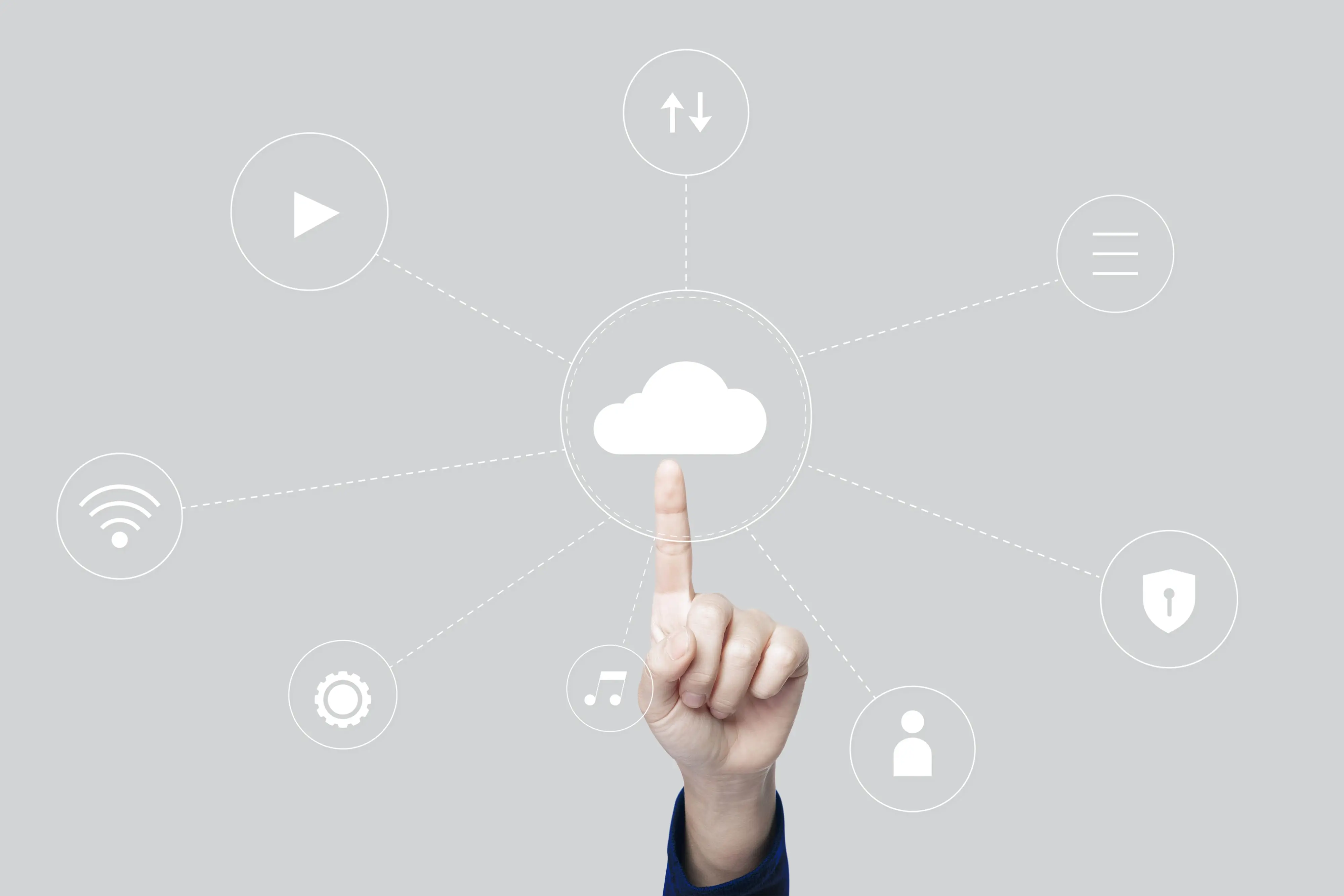
A POS orchestrates your sales, influences the customer experience, and supports the growth of your business. But when faced with the market offering, one key question arises: Cloud or On-Premise?
Each option has its advantages and limitations, whether in terms of flexibility, security, or scalability. While cloud POS systems appeal for their agility and low maintenance requirements, on-premise POS systems are ideal for those who prioritize total control and network independence. And let's not forget the advent of hybrid solutions, which promise the best of both worlds: offline stability coupled with the power of the cloud.
POS Cloud is a point-of-sale solution hosted on remote servers and accessible via the Internet. All data and features are centralized in the cloud, allowing for simplified update management, multi-site access, and maintenance provided by the publisher. Businesses do not need to invest in complex local infrastructure and can quickly benefit from new features and fixes.
Conversely, On-Premise POS is installed directly on the company's servers. This solution offers total control over data and configurations, but requires internal technical skills for installation, maintenance, and updates. Companies must anticipate the cost of hardware, licenses, and IT support, while ensuring the security and availability of the system on their own.
The Cloud POS stands out for its flexibility, accessibility, and scalability. It is ideal for multi-site organizations or those looking for a solution that can be quickly implemented. However, it depends on an internet connection, and some companies may be reluctant to entrust their data to a third party.
On-premise POS systems allow for greater customization and even work in the event of an internet outage. However, they are less flexible, costly to set up, and require constant technical monitoring to remain secure and up to date.
To combine the advantages of both methods, some solutions offer a hybrid POS, operating in offline-first mode with cloud synchronization.
This means that sales and operations can continue even without an Internet connection, then automatically synchronize as soon as the network becomes available. This approach is particularly suited to sectors with multiple points of sale or unstable networks, ensuring continuity of service and centralization of data.
There are several factors to consider before choosing your POS, namely whether you need a cloud-based POS or an on-premise POS.
The choice of a POS depends primarily on the industry.
Adapting the POS to the specific needs of the sector is essential to ensure efficiency and customer satisfaction.
User experience (UX) is a key criterion for rapid adoption of the system by staff.
An intuitive interface reduces training time and limits handling errors, which is crucial in busy environments. Staff training must be integrated into the POS deployment to ensure a smooth transition and maximize operational efficiency from day one.
A modern POS must be able to easily connect to ERP systems to synchronize inventory, accounting, and sales.
Integration with CRM, PIM, CDP, and DXP ensures product data consistency and enhances marketing personalization, creating a consistent customer experience across all touchpoints.
Safety is essential.
The POS must comply with the GDPR for customer data protection and be PCI DSS compliant for card payments. Solutions must also include regular backups and disaster recovery plans to prevent data loss.
Finally, the total cost of ownership must be assessed, including hardware, licenses, maintenance, and support.
The cloud model can offer lower initial costs and simplified maintenance, while on-premise involves a higher initial investment but total control over the infrastructure. The choice will depend on the size of the company, the budget, and the long-term strategy.
Choosing the right POS is a strategic decision that influences sales flow, customer experience, and data management.
When choosing between cloud, on-premise, or hybrid solutions, it is essential to consider the specific needs of the sector, user experience, connectivity with your tools, security, and total cost of ownership. A well-informed choice guarantees operational efficiency, rapid adoption by staff, and system scalability.
Whether you are in fast food, luxury retail, or B2B, analyzing these criteria will enable you to choose the POS that best suits your organization, while anticipating future growth and changes.
Choosing between a cloud, on-premise, or hybrid POS system is a fundamental decision for any business, as this choice directly impacts the customer experience, sales continuity, and growth capacity. Cloud POS systems stand out for their flexibility, rapid deployment, and simplified maintenance, making them ideal for multi-site or rapidly growing organizations. On-premise POS, on the other hand, offers total control over infrastructure and data, as well as independence from the internet connection, at the cost of a heavier investment and technical management. Hybrid, offline-first solutions combine these approaches by ensuring business continuity while benefiting from cloud centralization.
To make the right choice, it is essential to analyze sector-specific needs, UX and adoption by teams, connectivity with ERP, CRM, or PIM, security and compliance requirements, and TCO. A well-chosen POS then becomes a sustainable lever for performance and scalability.



_Leader_Mid-Market_Leader.svg)

_MomentumLeader_Leader.svg)

_BestResults_Enterprise_Total.svg)
_HighestUserAdoption_Enterprise_Adoption.svg)
_UsersMostLikelyToRecommend_Enterprise_Nps.svg)


%201.svg)
%201.svg)