


POS systems: how to turn checkout into an omnichannel driver
23 December 2025
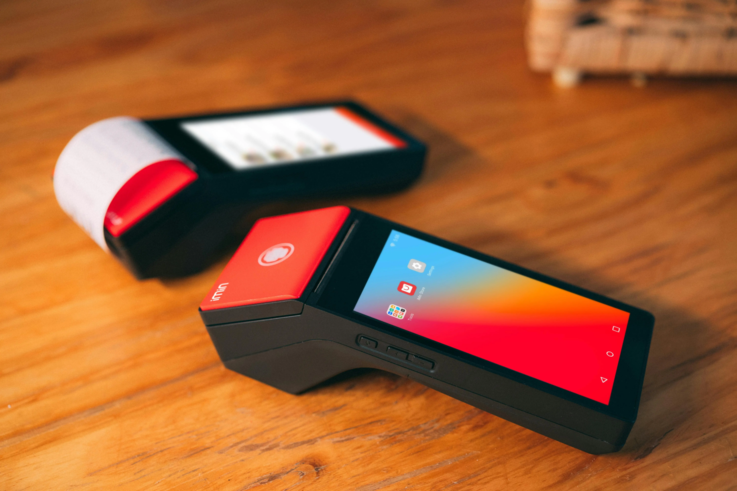
Once limited to the role of a simple till, point-of-sale management has evolved significantly. Today, a POS (Point of Sale) system does more than simply process payments: it synchronises stock levels, centralises customer data, connects online and offline channels, and becomes a key driver of performance.
In a context where the shopping experience must be seamless, fast and consistent, choosing a modern POS system can make the difference between a business that is struggling and one that is accelerating its growth.
Better still, when combined with a PIM (Product Information Management) system, it ensures that product information is reliable and consistent across all touchpoints.
What is a POS system today?
A point-of-sale (POS) system is the set of hardware and software tools used to manage a commercial transaction.
In practical terms, it is the solution used when a customer pays for a product or service, but its functions extend far beyond simply processing payments: stock monitoring, staff management, sales reports, integration with customer loyalty schemes and connection to digital channels.
The difference between a POS and a cash register
In the past, a POS was simply a cash register: a mechanical or electronic device that calculated totals and printed receipts.
Today, the POS has become a fully-fledged digital platform. It can be installed on a fixed touchscreen till, a tablet, a smartphone or even a self-service kiosk, and integrates with a business’s entire ecosystem.
Difference between POS and ERP (front-office vs. back-office)
It is also important to distinguish between POS and ERP. The POS acts as a front-office tool: it is closest to the customer and manages direct sales-related interactions.
ERP, on the other hand, is a back-office tool: it centralises the management of resources (accounting, procurement, logistics). The two systems are complementary: the POS collects sales data in real time, which the ERP then uses to drive strategy and operations.
How does a modern POS work?
A modern POS system is no longer limited to processing payments: it manages the entire shopping journey, streamlines the customer experience and feeds data into the company’s digital ecosystem.
In-store purchasing process
When a customer selects a product, it is scanned and then added to a virtual basket. The POS automatically calculates the total, taking into account discounts, promotions and taxes.
The customer then chooses their payment method: cash, bank card, digital wallet or contactless payment. Once the transaction is confirmed, stock levels are updated in real time, a receipt (paper or digital) is issued, and the information can be used to enhance a loyalty scheme.
Different types of interfaces
The POS is no longer limited to a traditional till:
- Fixed touchscreen till: central to traditional high-street shops;
- Self-service kiosk: promotes self-service and reduces waiting times;
- Sales assistant’s tablet: enables transactions to be processed directly on the shop floor or in the dining area;
- mPOS (mobile POS): installed on a smartphone or lightweight device, it is ideal for fast food outlets, events or mobile businesses.
Integration with e-commerce and CRM
A POS system realises its full potential when it is interconnected. Linked to the e-commerce site, it synchronises stock levels and prices in real time to avoid inconsistencies. When connected to the CRM, it updates customer history, improves personalisation and facilitates marketing campaigns. This integration ensures omnichannel continuity: customers enjoy the same experience and access the same information, whether they shop online or in-store.
The components of a POS
A POS comprises both hardware and software. In terms of hardware, it generally consists of:
- a touchscreen terminal or a computer;
- a barcode scanner;
- a card reader or contactless terminal;
- a receipt printer;
- a cash drawer for cash payments.
On the software side, the POS system covers several functions: payment processing, stock management, reporting, staff monitoring and loyalty schemes. Modern solutions are accessible via APIs, making it easier to integrate them with ERP, PIM, CRM or accounting systems. The POS thus becomes a true hub for connected retail.
POS and PIM
A POS system becomes truly strategic when linked to a PIM (Product Information Management) system. The POS handles the transaction, but it is the PIM that ensures the consistency and reliability of the product data used during the sale.
In the fashion sector, the PIM ensures that the information displayed at the till or on a sales assistant’s tablet is accurate: up-to-date prices, available sizes and colours, promotion management, etc. This prevents errors and builds customer trust.
In the tourism sector, a PIM enables the centralisation of multilingual and multi-currency information. A connected POS system thus benefits from content tailored to the local market, whether for booking a holiday or purchasing an activity at the point of sale.
In B2B, where catalogues are often complex with prices varying by customer, the PIM facilitates the distribution of clear and personalised information. The POS then relies on this reliable data to offer tailored commercial terms in real time.
In practice, the PIM prevents pricing and stock errors, synchronises promotions and product launches more quickly, and feeds all channels (POS, e-commerce, marketplaces). Linked to the POS, it transforms the sales process into a consistent, omnichannel and frictionless experience.
Conclusion
Today, the POS is no longer just a till, but a true omnichannel hub capable of centralising transactions, synchronising stock levels and enriching customer data. When combined with a PIM, it becomes a strategic asset: all product information is reliable, consistent and immediately available across all channels, from physical shops to e-commerce sites and marketplaces.
This combination helps reduce pricing and stock errors, speed up product launches and promotions, and deliver a seamless, personalised customer experience. Whether in fashion, tourism or B2B, POS-PIM integration ensures the consistency of product information and optimises the management of complex catalogues.
By choosing a modern POS system interconnected with a PIM, businesses transform every transaction into a driver of performance and competitiveness, fostering balanced growth and a flawless omnichannel customer experience. The POS then becomes much more than just a payment tool: it lies at the heart of the commercial and digital strategy.